

LHC Warming-up for Long Shutdown 3
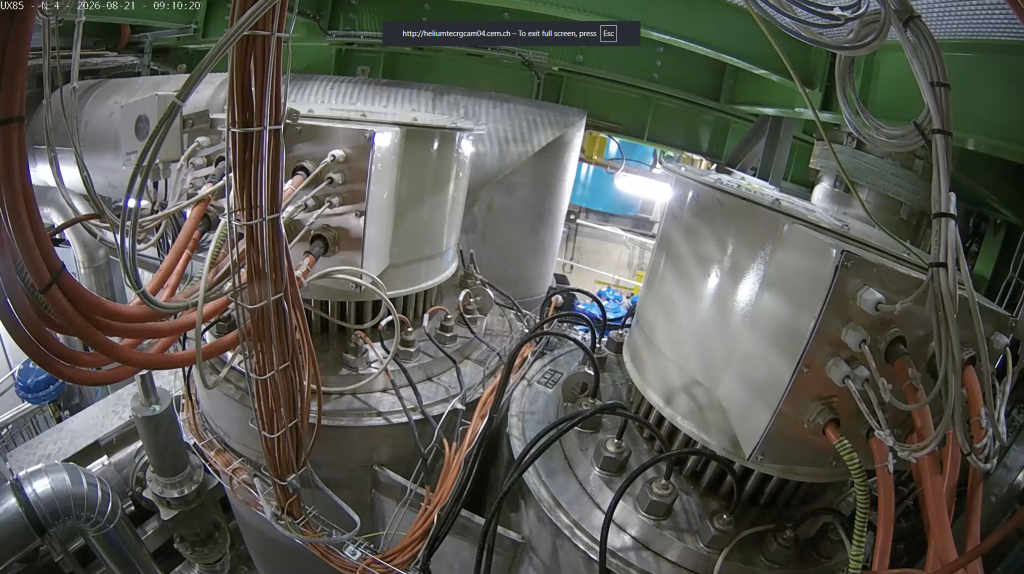
QUI Heaters at Point 8
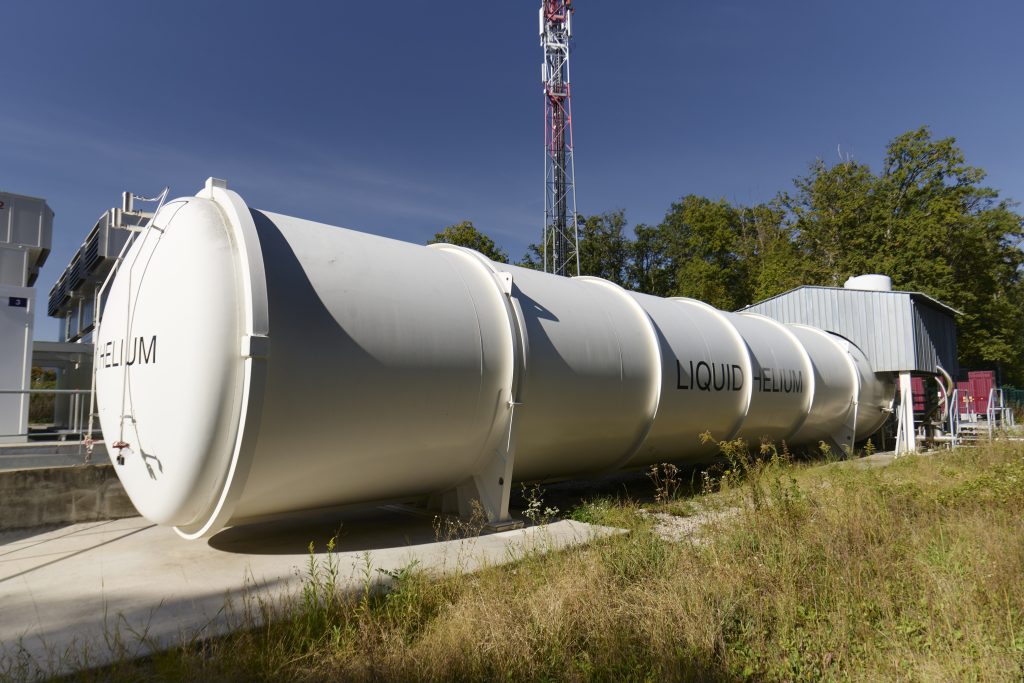
QSDH tank at Point 8
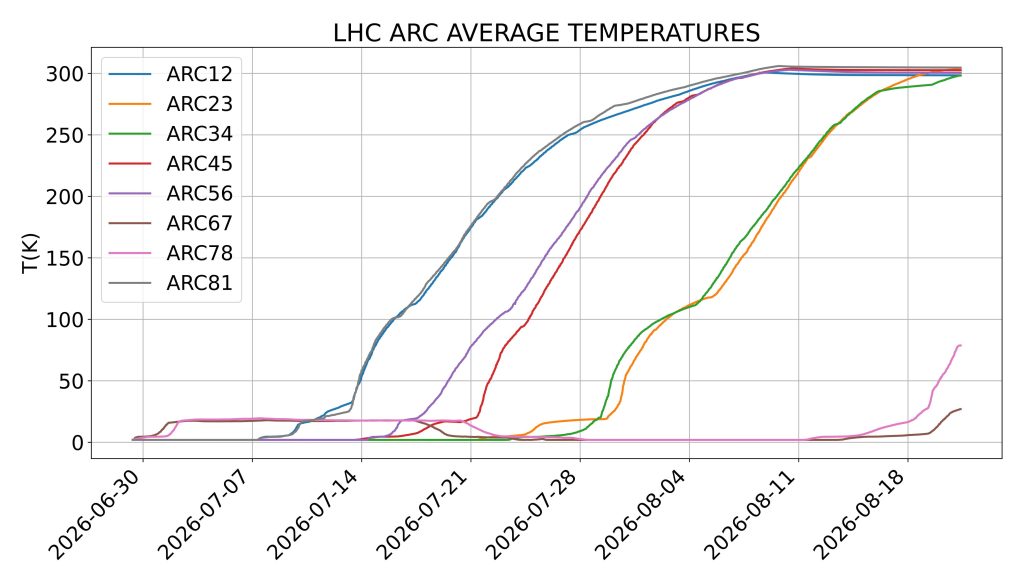
The LHC is currently undergoing its third full warm-up since the start of its operation. The LHC cryogenic system is divided into eight sectors, each approximately 3.3 km long. During the warm-up, each sector must be brought from its operating temperature of 1.9 K (−271 °C) to room temperature in a carefully controlled manner. The cryogenic operations team of TE-CRG is responsible for supervising this complex procedure, which started on the first day of Long Shutdown 3 (LS3) on the 29th of June, and will last until mid-September. In accordance with the LS3 master schedule, the sectors are warmed up in pairs, with each warm-up campaign lasting approximately five weeks.
The first week is dedicated to vaporizing the liquid helium at 4.5 K using small electrical heaters distributed along the magnets. The helium gas is then transferred to the surface, where it is re-liquefied by the cryogenic refrigeration system and stored in large-scale insulated vessels (Dewars embedding liquid nitrogen thermal shields). CERN has the capacity to store less than one third of the LHC helium inventory of approximately 150 tonnes, with the rest transferred to external facilities in vacuum-insulated ISO containers, each carrying approximately 4.4 tonnes of liquid helium. This logistics operation is supported by CERN’s helium suppliers, who either provide temporary storage capacity or are authorized to incorporate the helium into their supply chain for a limited period. All helium transferred off-site will be progressively returned to CERN between mid-2028 and the end of 2029, ensuring the required inventory is available for the restart of the LHC.
The second week is dedicated to the gradual warm-up of the magnets to approximately 80 K. To maintain an acceptable temperature difference across the cryogenic refrigerator interface, a 600 kW electrical heater installed in the caverns is used to heat the helium before circulating it through the magnets. A dedicated control algorithm, developed and validated during LS2, is now fully operational and ensures a smooth warm-up while satisfying the various constraints of this complex system. Nevertheless, cryogenic operators continue to work in shifts at the CERN Control Centre (CCC) to monitor all cryogenic processes and manage helium transfers between the different cryogenic plants as required.
The final three weeks of the warm-up, from 80 K to room temperature, follow the same procedure but in addition there are two controlled degradations of the insulation to accelerate the process. Following each vacuum degradation, the cryogenic operation team measures the temperature of the outer surfaces of the cryostats in the tunnel to verify that there remains sufficient thermal insulation to prevent condensation on the exterior of the cryostats. During these weeks, access to the tunnel is prohibited because the thermal expansion of materials is more significant in this temperature range, increasing the risk of cryogenic circuit damage and subsequent helium release.
The warm-up is considered complete once the temperature of the coldest magnet is safely above the dew point of the tunnel air (typically around 12 °C), ensuring that no condensation can occur when the cryogenic circuits are opened.
Benjamin Bradu & Frédéric Ferrand, TE-CRG (28th July 2026)